Spotify
 Apple Podcasts
 Amazon Music
 CastBox
 PocketCasts
 RSS
 YouTube
A Borrowed Cassette Changed Everything
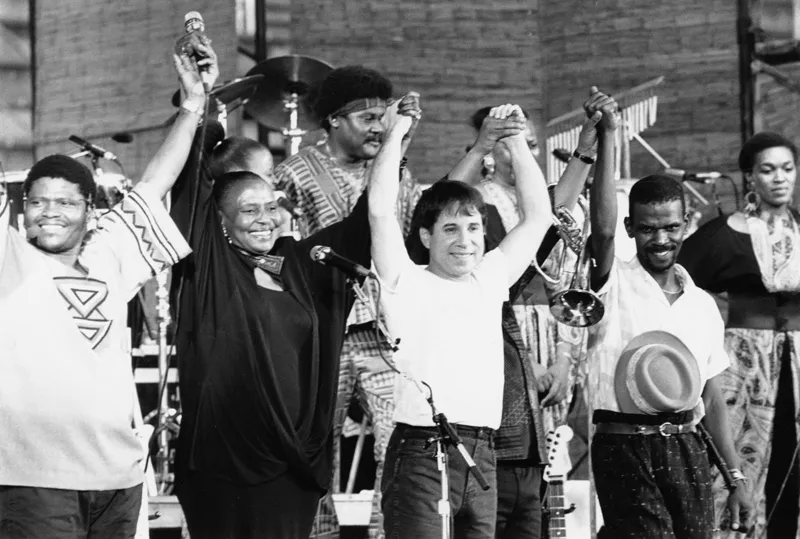
Sometimes a musical comeback begins with something remarkably ordinary. For Paul Simon, it was a borrowed cassette playing in his car. The sounds of South African township music caught his imagination. He listened repeatedly, began inventing lyrics and felt the urge to record again. That spark would help ignite Graceland, the 1986 album that transformed his career and brought South African musicians to a much wider international audience. Forty years later, author and music historian Ashley Kahn explores its beginnings, musical ambition and enduring controversy.
Why Paul Simon Needed a New Direction
Following the disappointing commercial performance of Hearts and Bones, some people believed Simon’s greatest achievements were behind him. The mid-1980s belonged to MTV, synthesisers and increasingly powerful record companies. Although Simon appreciated contemporary artists, he was drawn towards sounds beyond mainstream American pop. South African township rhythms, Louisiana zydeco and the music of East Los Angeles offered the excitement he remembered from discovering early rock and roll. In Kahn’s telling, this apparent reinvention was also a return to the feeling that had first made Simon love music.
He Wanted the Musicians on the Tape
Simon took his new enthusiasm to Warner Bros. According to Kahn, it was suggested to bring in familiar session players and producer Nile Rodgers. But Simon had something else in mind: he wanted to collaborate with the musicians whose playing had inspired him. That distinction became central to Graceland. Simon travelled to Johannesburg in 1985. What began there would develop into a recording project stretching across several locations and musical traditions.
The South African Collaborations Behind Graceland
Kahn describes how Simon found a rhythm section in Johannesburg with whom he felt a strong musical connection. Those relationships continued and Ladysmith Black Mambazo also became an essential part of the project. But Graceland reached beyond South Africa. Recording in New York, Los Angeles and Crowley, Louisiana helped shape an album that connected township music, American songwriting, zydeco and roots influences.
The Cultural Boycott and the Difficult Questions
The journey unfolded under apartheid, when an international cultural boycott sought to isolate South Africa’s racist regime. Simon’s decision to record there provoked criticism.

Why Graceland Still Matters
Graceland was both a creative breakthrough and a complicated cultural encounter. Kahn brings the story back to curiosity, collaboration and renewed enthusiasm: a songwriter hearing something unfamiliar and wanting to understand it through making music. For anyone who loves Paul Simon, South African music or the stories behind classic albums, this episode offers a revealing look at how inspiration can change a career—and start a debate that lasts for decades.
Days of Miracle and Wonder: Paul Simon and the Trials and Triumphs of Graceland